The U.S. Department of the Interior's new two-year Colorado River plan imposes no mandatory water supply cuts on Colorado.
The U.S. Department of the Interior finalized a two-year operating plan for the Colorado River on August 21, 2026, that leaves Colorado's water allocation unchanged. Arizona, California and Nevada will absorb a combined cut of 1.25 million acre-feet per year, while Colorado, New Mexico, Utah and Wyoming face no mandatory reductions. The decision replaces expiring operating guidelines and sets a 10-year framework requiring renegotiation every two years.
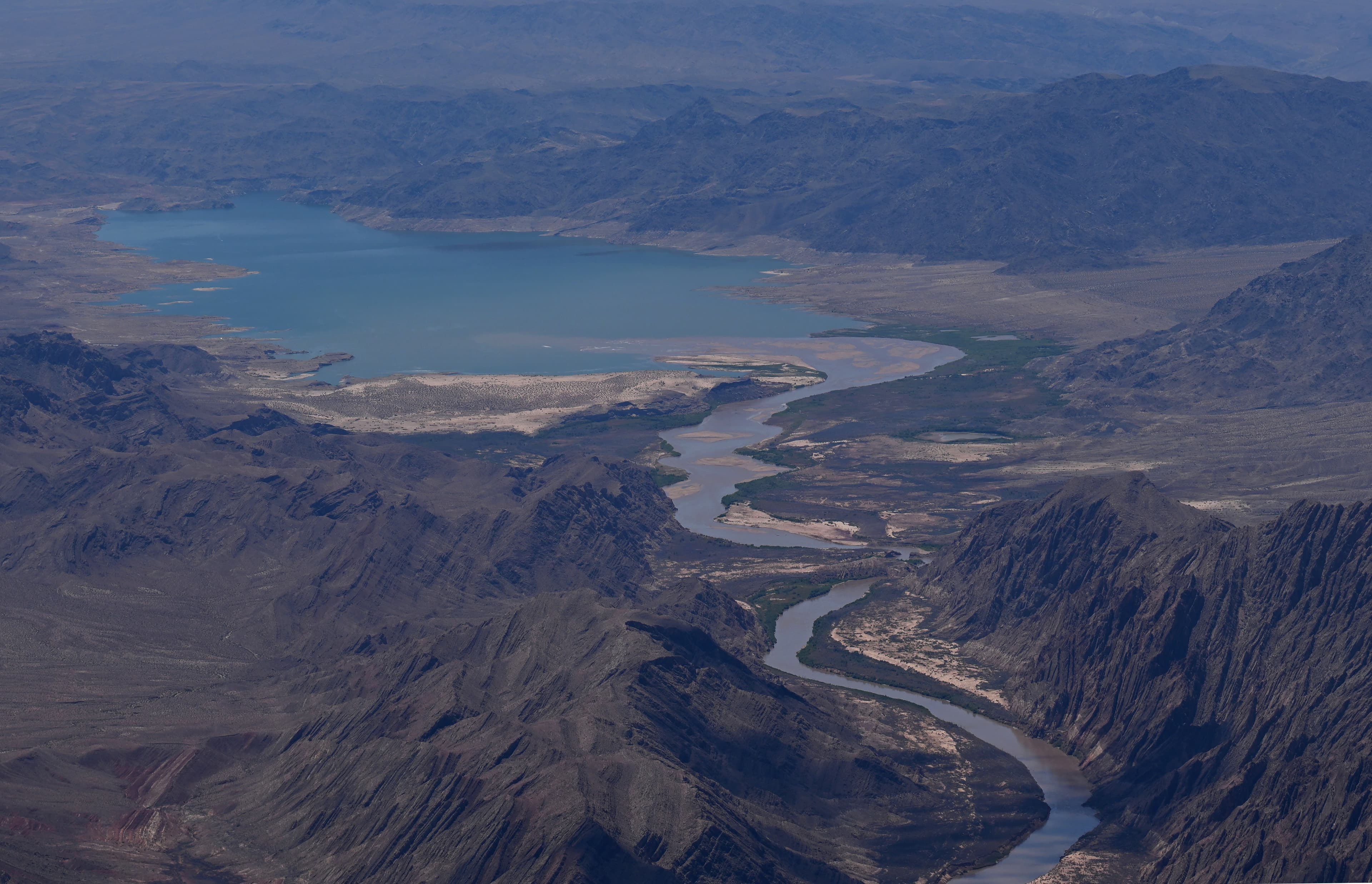
Colorado's water supply will not shrink under a new federal plan for managing the Colorado River, even as the river, which supplies 40 million people across the Southwest, sits at what the Interior Department calls a moment of "extraordinary risk."
The U.S. Department of the Interior published the plan on Friday, setting rules for how the river's two major reservoirs, Lake Powell and Lake Mead, will be operated and how water will be divvied up across seven states over the next two years. Colorado, along with New Mexico, Utah and Wyoming, will face no mandatory cuts. Arizona, California and Nevada, the Lower Basin states downstream of the reservoirs, will see their collective supply reduced by 1.25 million acre-feet in each of the next two years. An acre-foot of water covers the annual needs of roughly two families.
The reductions in the Lower Basin came after those states' negotiators offered to scale back their own consumption during talks; the federal plan adopted cuts close to that offer. The Interior Department has legal authority to mandate reductions in the Lower Basin but not in the Upper Basin, where Colorado, New Mexico, Utah and Wyoming sit above the reservoirs and draw water before it reaches them.
Friday's release caps years of negotiation, public comment and technical modeling that began in 2022, after officials realized the operating rules governing the river since 2007 would expire. The seven basin states tried to agree on a joint long-term plan for managing the river for decades to come but could not reach consensus, leaving the federal government to write its own rules.
Rather than issue another long-range plan, the Interior Department set a 10-year framework that requires the two-year operating guidelines to be renegotiated on that schedule, within boundaries the agency has already set. States can still replace the framework with their own long-term agreement at any point during the decade if they manage to agree on one.
Interior Secretary Doug Burgum credited the seven basin states, more than two dozen basin tribes and Mexico for reaching the voluntary arrangements that shaped the two-year guidelines covering 2027 and 2028. He said the river supports 40 million people, millions of acres of farmland and ranchland, and some of the country's fastest-growing metro areas. California's top Colorado River negotiator, JB Hamby, said the decision gives the river "badly needed near-term certainty" during a period of severe strain on the system.
In Colorado, where the river originates before flowing toward the Gulf of California, the water supports Western Slope agriculture and municipal systems that serve much of the Front Range, including the Denver metro area. It also supports rafting, fishing and other recreation on the Western Slope and provides habitat for several endangered fish species.
The plan takes effect after years of drought that have cut flows across the basin, with continued draws on stored water leaving Lake Powell and Lake Mead depleted. On Colorado's Western Slope, cumulative streamflows this year have ranged from near-record to record lows. At Cameo, just upstream of Palisade and Grand Junction, water volumes on the Colorado River have never been lower in nearly a century of record-keeping.
That drought has already forced hard choices on ranchers and irrigators who depend on the river's tributaries, regardless of what the federal allocation plan says about statewide supply. In the Yampa River valley, agricultural users received only about half their normal water allocation from storage reservoirs this year, according to the Upper Yampa Water Conservancy District. Some ranchers culled a third of their herds before spring calving and have spent the summer trucking water to pastures that can no longer support cattle on their own.
Colorado's overall entitlement under the interstate agreement is not being cut, but that entitlement does not guarantee water will be available where and when individual users need it. Reservoir levels, snowpack and local infrastructure still determine what actually reaches a rancher's field or a city's taps in any given year.
The Interior Department's decision also formally closes out the four-year process to replace the operating guidelines set in 2007, which expire this year. The two-year plan for 2027 and 2028 will be reopened for renegotiation on that timeline, giving the seven states another chance to reach a longer-term agreement before the next round of federal deadlines arrives.