State investigation finds Aspen Acres fire west of Pueblo started when aspen tree fell on San Isabel Electric power line

The Aspen Acres fire that burned more than 100,000 acres in the Wet Mountains west of Pueblo began when an aspen tree fell onto San Isabel Electric Association power lines during high winds at the end of June, according to a state investigation released this week.
The Colorado Division of Fire Prevention and Control said the tree stood just south of the Aspen Acres Campground in Custer County. The report says the tree’s weight stretched the energized wires down to within a few feet of the ground before they ignited.
Investigator Josh Dreher wrote the report for the division. The division said the report establishes the fire’s cause but does not determine liability.
The finding matches the ignition source described in several lawsuits filed by residents against San Isabel Electric Association, which operates the power lines. The lawsuits accuse the utility of negligence in its wildfire preparations.
San Isabel Electric Association has said its focus has been on repairing its system and restoring service to affected members. The utility did not comment further on the state report.
More than 100 days after it started, the Aspen Acres fire remained 82% contained. The fire destroyed more than 900 buildings. At least 340 of those structures were homes.
The fire also burned through terrain that has burned before. Over the last 20 years, six other large fires burned parts of the same ground in the Wet Mountains, including the Junkins and Beulah Hill fires in 2016, the Wetmore fire in 2012, the Mason Gulch fire in 2005 and the Oak Ridge fire in 2024.
In early September, U.S. Forest Service fuels specialist Ryan Elliot visited a ridge where the Mason Gulch burn scar overlaps the Aspen Acres perimeter. He said drought this year left large fuels dry before the smaller fuels usually monitored by firefighters had fully cured.
“The larger a fuel is, the longer it takes to dry out,” Elliot said. “This year, because of the drought conditions, the larger fuels were the things that were ready to go first. We were inverted. What that means is that once the finer fuels and the live fuels got cured out, we saw these rapid and explosive rates of spread.”
Elliot said wildland firefighters use a “haul chart” to gauge what they can do based on flame length. Zero to four feet can be handled by hand crews. Four to eight feet may require water from engines. Eight to 12 feet calls for dozers. Flames over 12 feet, he said, mean firefighters cannot put it out.
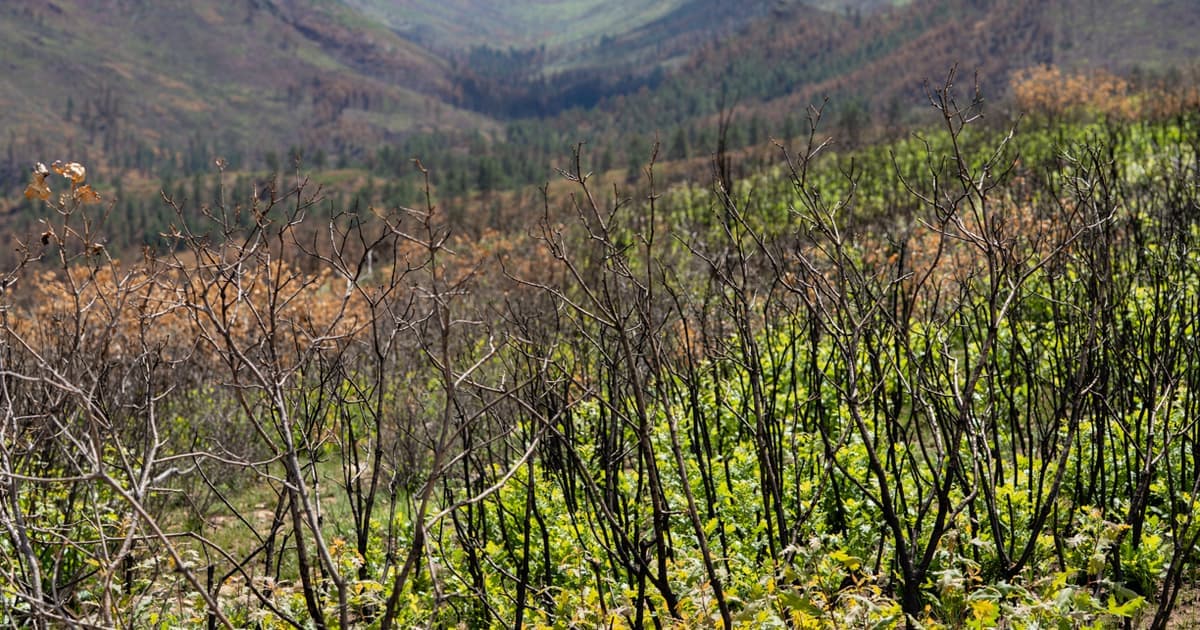
Near the old Mason Gulch line, oak brush was already growing back within weeks of the Aspen Acres fire. Fire crews had cut a bulldozer line into the hillside above the regrowth.
The state report includes photographs showing the charred tree at what investigators called the specific area of origin and the point where it contacted the energized lines. The report does not say whether San Isabel Electric Association failed to meet any wildfire safety standard.
The cause investigation is separate from the civil lawsuits over responsibility for the damage. Those cases are expected to move forward as the fire remains active and containment work continues.