Colorado Parks and Wildlife suspends killing of wolves after adult survival rate falls to 61%

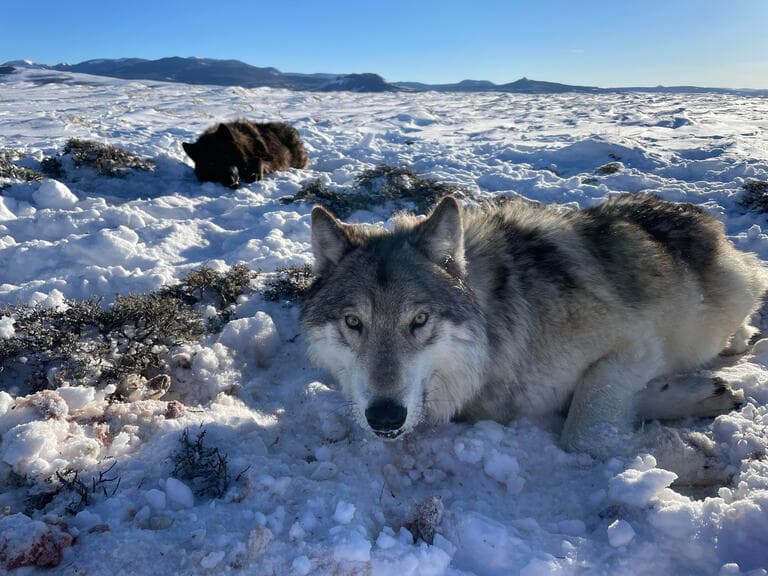
Colorado Parks and Wildlife announced Wednesday it will temporarily stop killing gray wolves that harass or kill livestock. The agency made the decision after reporting that adult wolf survival fell to 61% during the last biological year, a figure below the 75% survival rate typical of unhunted wolf populations.
The suspension affects the agency's chronic depredation directive, which had allowed lethal removal of wolves under certain conditions. CPW said it will now evaluate requests to kill wolves on a more conservative basis, citing concerns that population growth may not occur during the current biological year and evidence of a possible infectious parasite that could further reduce wolf survival.
The agency's midyear population count, released after pressure from wolf advocacy groups, identified 45 gray wolves in the state as of Sept. 24, 2026. That total includes breeding adults, yearlings, and 20 pups. CPW called it a new state record.
The population includes four reproducing packs, a fifth pack made up of four siblings that travel together, and several unpaired wolves that could potentially form pairs this winter.
Pup survival has been unusually high so far this biological year. CPW reported that 82% of detected pups survived their first year. But the agency noted that typical pup survival in Western wolf populations ranges from 50% to 60%, and it expects the current figure to decline by the end of the biological year in March 2027.
Adult survival, however, has already fallen. The 61% survival rate recorded from April 1, 2025, through March 31, 2026, sits well below the 75% rate that scientists associate with wolf populations not open to hunting.
CPW biologists and veterinarians are also investigating hair loss in multiple wolves from two packs in northwestern Colorado. The agency said the hair loss may be linked to an infectious skin parasite that could further affect wolf survival.
Colorado killed four wolves in 2026 under the state's "three and 30 rule." That rule defines chronic depredation as a single wolf killing or harassing livestock or working dogs three times within 30 days. Under the rule, the agency could shoot a wolf once that threshold was met.
Three of those killings came in early September, following confirmed livestock attacks by three wolves. The fourth occurred June 12, when CPW and USDA Wildlife Services killed an uncollared yearling in Grand County. The yearling was left behind after the agency trapped five of six members of the Copper Creek pack. The wolf had been linked to at least 22 sheep deaths over 11 months in Routt County.
CPW said the suspension aligns with the Colorado Wolf Restoration and Management Plan, which directs the agency to use an adaptive approach to wolf management. The plan states that CPW must weigh factors including wolf reproductive success, population size, and listing status when evaluating lethal control.
The agency will work with stakeholders to revisit the chronic depredation directive and the conditions under which the state can kill wolves. CPW said revised rules will be in place by April 1, 2027, the start of the next wolf biological year.
Until then, the agency said it will continue working with ranchers and farmers to deploy nonlethal tools and methods. Those include range riders who patrol areas with high wolf activity, site assessments, technical assistance, and nonlethal hazing permits.
CPW also pledged to continue processing two petitions before the Colorado Parks and Wildlife Commission concerning wolf damage compensation and wolf attacks. The agency said it will extend the range riding season in select locations based on conflict levels and producer willingness, continue reviewing retroactive permits that allow ranchers to kill wolves they catch attacking livestock, and maintain current compensation regulations for verified losses.
"We're doing everything we can to meet our objective of a sustainable population while working with livestock producers and continuing to follow the adaptive guidance provided in the Wolf Restoration and Management Plan," CPW Director Laura Clellan said in a statement.